Saturday, January 2, 2016
Friday, November 13, 2015
Conditionals
| Mother: “Greg, I want to make a cake this afternoon. Will you help me?” Greg: “If I have time, I will help you.” |
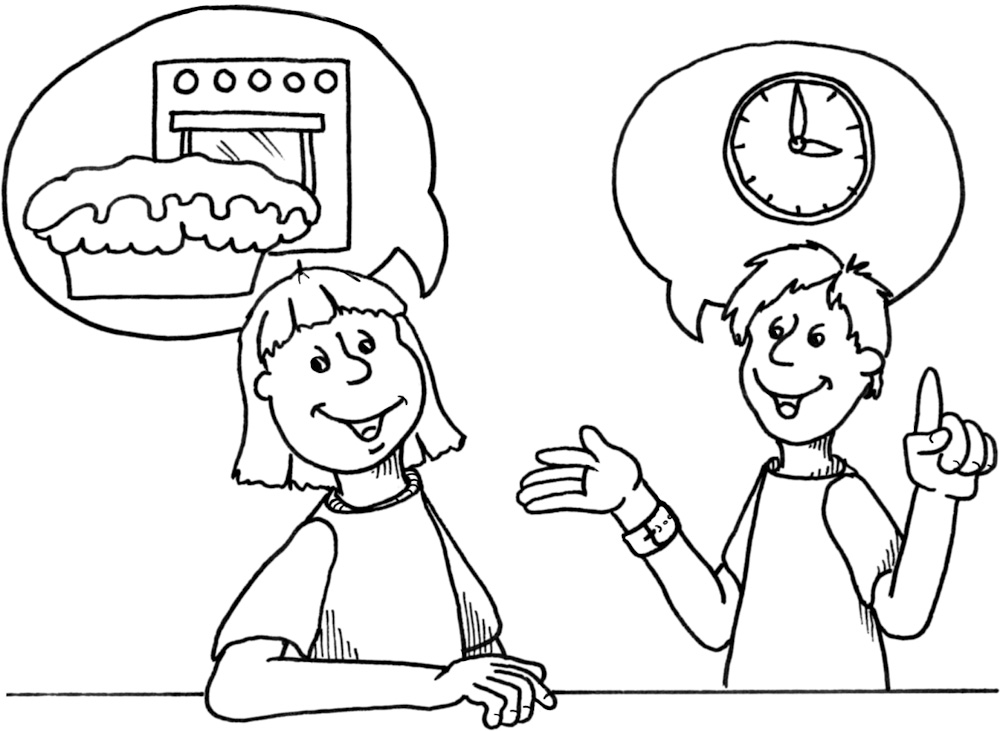 |
| Mother: “Greg, I am going to make the cake now. Can you help me?” Greg: “If I had time, I’d help you. But I have to do my homework.” |
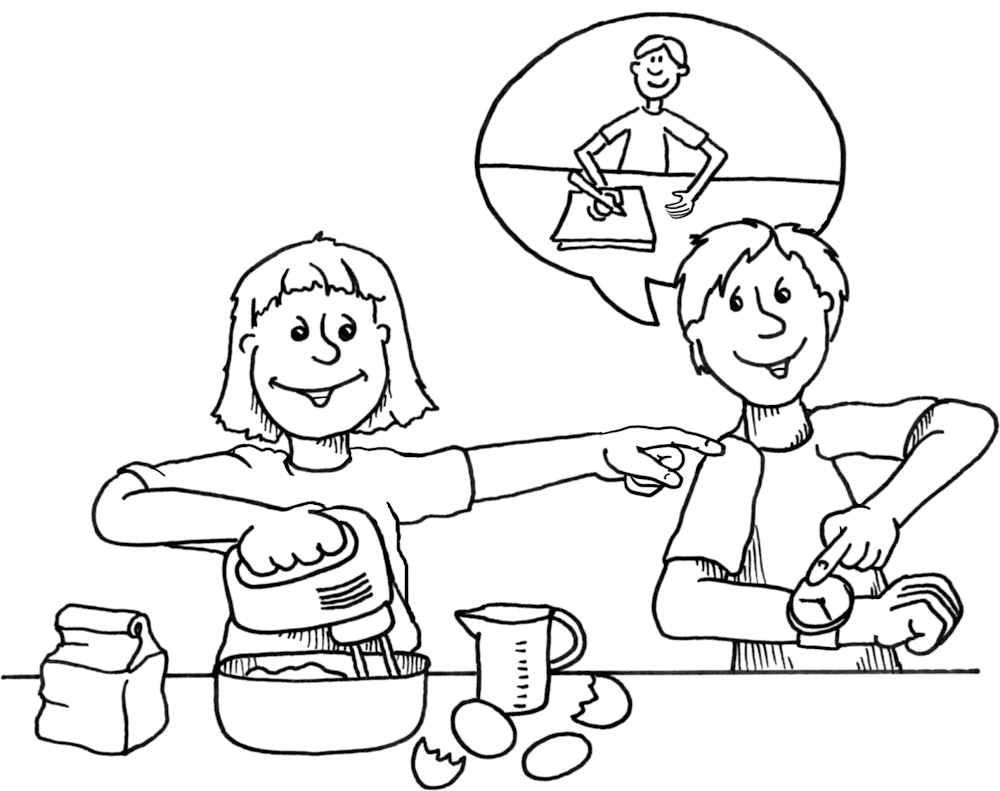 |
| Mother: “Now I’ve made the cake myself. Why didn’t you help me?” Greg: “If I’d had time, I would have helped you. But I had to do my homework.” |
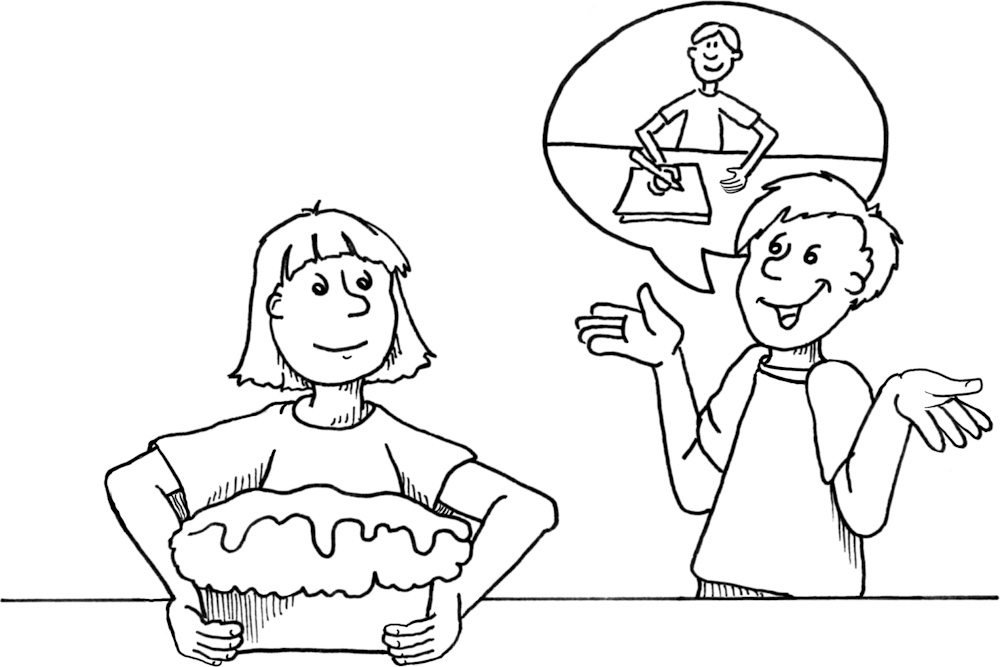 |
Condicional
I would go. Yo iría.
We would study.
Estudiaríamos.
Contracted Form:
Contracted Form:
|
I would
|
I'd [aid]
|
|
You would
|
You'd [iud]
|
|
He would
|
He'd [hid]
|
|
She would
|
She'd [shid]
|
|
It would
|
It'd [Itd]
|
|
We would
|
We'd
|
|
They would
|
They'd
|
We’d go to Paris. Iríamos a Paris.
Conditional Cero
Este condicional refiere a una situación que es siempre verdadera (verdades
universales):
- If you freeze
water, it turns into ice.
Si congelas el agua, se convierte en hielo. - If I work too much, I get
tired.
Si trabajo demasiado, me canso. - If I have time, I go to the
movies.
Si tengo tiempo, voy al cine. - If she eats fish, she gets an
allergy.
Si ella come pescado, le da alergia. - If they come here, they always
bring a present.
Si ellos vienen aquí, siempre traen un regalo. - If she doesn't know the answer,
she keeps silent.
Si ella no sabe la respuesta, se mantiene en silencio. - If we don't go out on
Saturdays, we rent a video and stay home.
Si no salimos los sábados, alquilamos un video y nos quedamos en casa.
Primer Condicional
Se emplea cuando una situación es real o posible. Se forma con if + simple
present + simple future.
|
If + Present
tense
|
will / can /
may / must + verb
|
· If
it rains today, I'll stay at home.
Si llueve hoy, me quedaré en casa.
Si llueve hoy, me quedaré en casa.
· If
he is busy now, I will come back tomorrow.
Si está ocupado ahora, regresaré mañana.
Si está ocupado ahora, regresaré mañana.
· If I
have time, I'll visit my parents this afternoon.
Si tengo tiempo, visitaré a mis padres esta tarde.
Si tengo tiempo, visitaré a mis padres esta tarde.
· If
it is warm tomorrow, we'll go to the beach.
Si está caluroso mañana, iremos a la playa.
Si está caluroso mañana, iremos a la playa.
· If
it is cold, you must wear warm clothes.
Si está frío, debes usar ropa abrigada.
Si está frío, debes usar ropa abrigada.
· If
he doesn't do his homework, he can not go to the party.
Si él no hace su tarea, no puede ir a la fiesta.
Si él no hace su tarea, no puede ir a la fiesta.
· If
she doesn't call you, you can call her.
Si ella no te llama, tú puedes llamarla.
Si ella no te llama, tú puedes llamarla.
· If
they don't invite you, you must not go.
Si ellos no te invitan, no debes ir.
Si ellos no te invitan, no debes ir.
· If
we don't hurry, we'll miss our bus.
Si no nos apuramos, perderemos nuestro autobus.
Si no nos apuramos, perderemos nuestro autobus.
· If
you pay now, you'll get a discount.
Si pagas ahora, obtendrás un descuento.
Si pagas ahora, obtendrás un descuento.
· If
they don't want to go out, they can stay home.
Si no quieren salir, se pueden quedar en casa.
Si no quieren salir, se pueden quedar en casa.
· If
you drink too much, you'll get drunk.
Si bebes demasiado, te emborracharás.
Si bebes demasiado, te emborracharás.
· If
you feel sick, you must stay in bed.
Si te sientes enfermo, debes quedarte en cama.
Si te sientes enfermo, debes quedarte en cama.
· If
they don't come here, we'll have to go there.
Si ellos no vienen aquí, tendremos que ir allí.
Si ellos no vienen aquí, tendremos que ir allí.
Segundo Condicional
Refiere a una situación hipotética y se forma según la estructura if +
simple past + simple condicional.
|
If + Past
Simple
|
would / could / might + verb
|
· If I
won the lottery, I would travel around the world.
Si ganara la lotería, viajaría por todo el mundo.
Si ganara la lotería, viajaría por todo el mundo.
· If I
were in Brazil, I would go to Rio de Janeiro.
Si yo estuviese en Brasil, iría a Río de Janeiro.
Si yo estuviese en Brasil, iría a Río de Janeiro.
· If I
were you, I would buy that car.
Si yo fuese tú, compraría ese auto.
Si yo fuese tú, compraría ese auto.
· If
he were in my place, he wouldn't do this.
Si él estuviese en mi lugar, no haría esto.
Si él estuviese en mi lugar, no haría esto.
· If I
had more money, I would buy a nice apartment.
Si yo tuviese más dinero, me compraría un lindo apartamento.
Si yo tuviese más dinero, me compraría un lindo apartamento.
· If
she had more time, she would travel more often.
Si ella tuviera más tiempo, viajaría más a menudo.
Si ella tuviera más tiempo, viajaría más a menudo.
· If
it were not raining, we could go out.
Si no estuviese lloviendo, podríamos salir.
Si no estuviese lloviendo, podríamos salir.
· If
they won the lottery, they wouldn't work any more.
Si ellos ganaran la lotería, no trabajarían más.
Si ellos ganaran la lotería, no trabajarían más.
· If I
saw her, I would ask her out.
Si la viera, la invitaría a salir.
Si la viera, la invitaría a salir.
· If
you went to Brazil, you wouldn't want to come back.
Si fueras a Brazil, no querrías regresar.
Si fueras a Brazil, no querrías regresar.
· If
they spoke Spanish, we would understand them.
Si ellos hablasen español, los entenderíamos.
Si ellos hablasen español, los entenderíamos.
· If
he didn't live by the river, he couldn't go fishing.
Si el no viviera cerca del río, no podría ir a pescar.
Si el no viviera cerca del río, no podría ir a pescar.
· If I
didn't want to go, I would tell you.
Si no quisiera ir, te lo diría.
Si no quisiera ir, te lo diría.
· If
they worked for that company, they might have better salaries.
Si ellos trabajaran para esa compañía, podrían tener mejores sueldos.
Si ellos trabajaran para esa compañía, podrían tener mejores sueldos.
· If
she wrote a book, it would be a best-seller.
Si ella escribiese un libro, sería un best-seller.
Si ella escribiese un libro, sería un best-seller.
Third Condicional
Third Conditional, también -Type III- Refiere a una situación hipotética
del pasado y se forma según la estructura : if + past perfect + conditional
perfect.
|
If + Past
Perfect tense
|
would/could/might
+ have + past participle
|
Pluscuamperfecto + Condicional perfecto
· If I
had won the lottery, I would have traveled around the world.
Si yo hubiera ganado la lotería, habría viajado por todo el mundo.
Si yo hubiera ganado la lotería, habría viajado por todo el mundo.
· If I
had seen him, I would have told him about you.
Si lo hubiese visto, le habría contado acerca de ti.
Si lo hubiese visto, le habría contado acerca de ti.
· If I
had known the answer, I would have raised my hand.
Si hubiese sabido la respuesta, habría levantado mi mano.
Si hubiese sabido la respuesta, habría levantado mi mano.
· If
she had come on Saturday, I would have seen her.
Si ella hubiese venido el sábado, la habría visto.
Si ella hubiese venido el sábado, la habría visto.
· If
they had left earlier, they would have arrived on time.
Si ellos hubiesen salido más temprano, habrían llegado a tiempo.
Si ellos hubiesen salido más temprano, habrían llegado a tiempo.
· If
we had studied harder, we might have passed the test.
Si hubiésemos estudiado más duro, podríamos haber aprobado la prueba.
Si hubiésemos estudiado más duro, podríamos haber aprobado la prueba.
· If
you had gone to Brazil, you would have had lots of fun.
Si tu hubieses ido a Brasil, habrías tenido mucha diversión.
Si tu hubieses ido a Brasil, habrías tenido mucha diversión.
· If I
hadn't been so busy, I could have helped you.
Si no hubiese estado tan ocupado, te podría haber ayudado.
Si no hubiese estado tan ocupado, te podría haber ayudado.
· If
you had phoned me, I would have known you were here.
Si tu me hubieses telefoneado, habría sabido que estabas aquí.
Si tu me hubieses telefoneado, habría sabido que estabas aquí.
· If
they had invited us, we would have accepted at once.
Si ellos nos hubiesen invitado, habríamos aceptado de inmediato.
Si ellos nos hubiesen invitado, habríamos aceptado de inmediato.
· If
she had explained me the problem, I would have understood it.
Si ella me hubiese explicado el problema, lo habría entendido.
Si ella me hubiese explicado el problema, lo habría entendido.
· If I
hadn't forgotten his number, I would have phoned him.
Si no hubiese olvidado su número, lo habría llamado.
Si no hubiese olvidado su número, lo habría llamado.
· If
it hadn't rained, we would have gone fishing.
Si no hubiese llovido, habríamos ido a pescar.
Si no hubiese llovido, habríamos ido a pescar.
· If
my sister had been here, she would have enjoyed this.
Si mi hermana hubiese estado aquí, habría disfrutado esto.
Si mi hermana hubiese estado aquí, habría disfrutado esto.
· If
they hadn't drunk so much last night, they wouldn't have felt sick today.
Si no hubiesen tomado tanto anoche, no se habrían sentido enfermos hoy.
Si no hubiesen tomado tanto anoche, no se habrían sentido enfermos hoy.
· If
he had worked more, he could have saved more money.
Si él hubiese trabajado más, podría haber ahorrado más dinero.
Si él hubiese trabajado más, podría haber ahorrado más dinero.
· If I had studied more before, I wouldn’t need to study now.
Si hubiera estudiado más antes, no necesitaría estudiar
ahora.
• De haber hecho calor, habría ido a la playa: If it had been hot, I would have gone to the beach
• De no haber tenido mucho trabajo, habríamos ido al cine: If we hadn´t had much work, we would have gone to the cinema
Wednesday, November 4, 2015
Slaughterhouse-Five by Kurt Vonnegut
A beautiful part from Kurt Vonnegut's Slaughterhouse-Five (Matadero 5).
He came slightly unstuck in time, saw the late movie
backwards, then forwards again. It was a movie about American bombers in the
Second World War and the gallant men who flew them. Seen backwards by Billy,
the story went like this:
American planes, full of holes and wounded men and corpses
took off backwards from an airfield in England. Over France, a few German
fighter planes flew at them backwards, sucked bullets and shell fragments from
some of the planes and crewmen. They did the same for wrecked American bombers
on the ground, and those planes flew up backwards to join the formation.
The formation flew backwards over a German city that was in
flames. The bombers opened their bomb bay doors, exerted a miraculous magnetism
which shrunk the fires, gathered them into cylindrical steel containers, and
lifted the containers into the bellies of the planes. The containers were
stored neatly in racks. The Germans below had miraculous devices of their own,
which were long steel tubes. They used them to suck more fragments from the
crewmen and planes. But there were still a few wounded Americans, though, and
some of the bombers were in bad repair. Over France, though, German fighters
came up again, made everything and everybody as good as new.
When the bombers got back to their base, the steel cylinders
were taken from the racks and shipped back to the United States of America,
where factories were operating night and day, dismantling the cylinders,
separating the dangerous contents into minerals. Touchingly, it was mainly
women who did this work. The minerals were then shipped to specialists in
remote areas. It was their business to put them into the ground, to hide them
cleverly, so they would never hurt anybody ever again.
The American fliers turned in their uniforms, became high
school kids. And Hitler turned into a baby, Billy Pilgrim supposed. That wasn’t
in the movie. Billy was extrapolating.

Entonces, tras
haberse aislado ligeramente del tiempo, vio la última película, primero al
revés, de fin a principio, y luego otra vez en sentido normal. Era una película
sobre la actuación de los bombarderos americanos durante la Segunda Guerra
Mundial y sobre los valientes hombres que los tripulaban. Vista hacia
atrás la historia era así:
Aviones americanos llenos de agujeros, de
hombres heridos y de cadáveres, despegaban de espaldas en un aeródromo de
Inglaterra. Al sobrevolar Francia se encontraban con aviones alemanes de
combate que volaban hacia atrás, aspirando balas y trozos de metralla de
algunos aviones y dotaciones. Lo mismo se repitió con algunos aviones
americanos destrozados en tierra, que alzaron el vuelo hacia atrás y se unieron
a la formación.
La formación
volaba de espaldas hacia una ciudad alemana que era presa de las llamas. Cuando
llegaron, los bombarderos abrieron sus portillones y merced a un milagroso
magnetismo redujeron el fuego, concentrándolo en unos cilindros de acero que
aspiraron hasta hacerlos entrar en sus entrañas. Los containers fueron
almacenados con todo cuidado en hileras. Pero allí abajo, los alemanes también
tenían sus propios inventos milagrosos, consistentes en largos tubos de acero
que utilizaron para succionar más balas y trozos de metralla de los aviones y
de sus tripulantes. Pero todavía quedaban algunos heridos americanos, y algunos
de los aviones estaban en mal estado. A pesar de ello, al sobrevolar Francia
aparecieron nuevos aviones alemanes que solucionaron el conflicto. Y todo el
mundo estuvo de nuevo sano y salvo.
Cuando los bombarderos volvieron a sus bases,
los cilindros de acero fueron sacados de sus estuches y devueltos en barcos a
los Estados Unidos de América. Allí las fábricas funcionaban de día y de noche
extrayendo el peligroso contenido de los recipientes. Lo conmovedor de la
escena era que el trabajo lo realizaban, en su mayor parte, mujeres. Los
minerales peligrosos eran enviados a especialistas que se encontraban en
regiones lejanas. Su tarea consistía en enterrarlos y esconderlos bien para que
así no volvieran a hacer daño a nadie.
Los pilotos americanos mudaron sus uniformes
para convertirse en muchachos que asistían a las escuelas superiores. Y Hitler
se transformó en niño, según dedujo Billy Pilgrim. En la película no estaba.
Porque Billy extrapolaba.
Subscribe to:
Posts (Atom)